A space without time
Solitary confinement is a laboratory of the mind—you hear your own breath, your memories, and voices that aren’t yours. Here, the body fades, and only fragments of a person remain—if any.
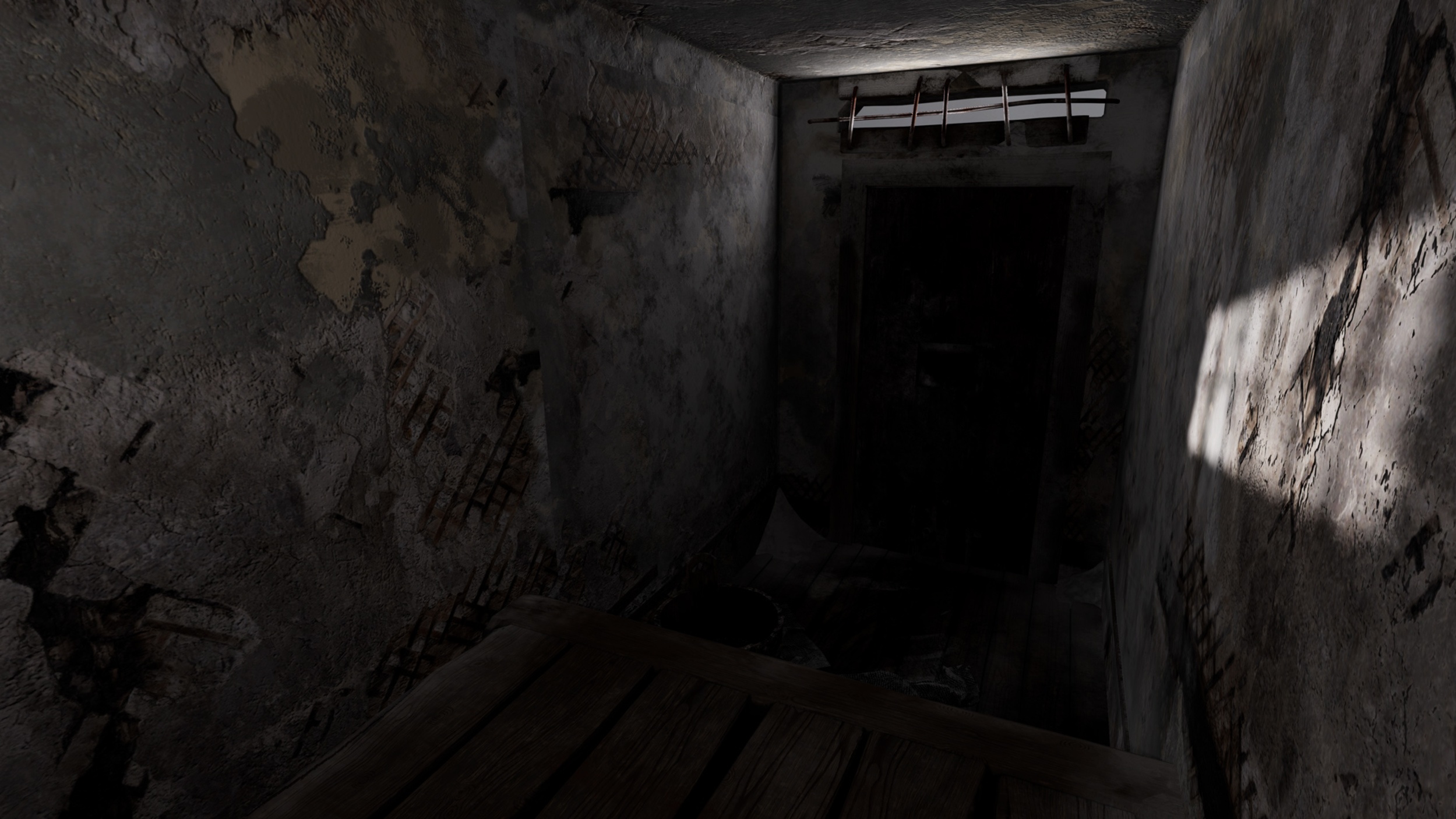
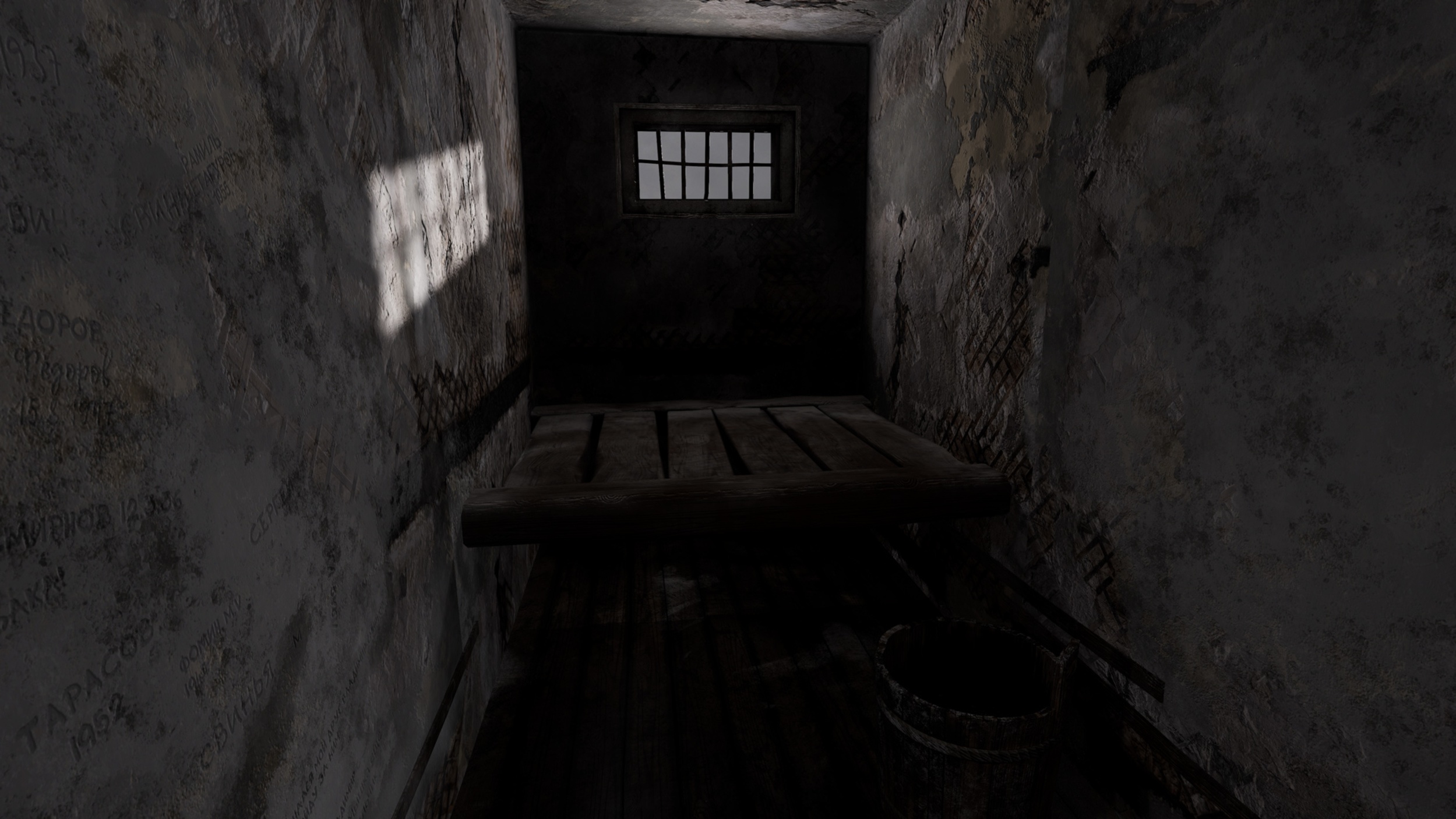
A tiny cell, silence, darkness, an icy floor. This scene is not action-driven. It is an experience of sensory deprivation that brings a heavy, unsettling feeling.
“When there is nothing left but your thoughts, even silence becomes deafening.”
Scene Objectives
- Listen to your own breath and the distant voices outside.
- Wipe frost from the walls to reveal messages carved by former prisoners.
Message
The scene explores the psychological impact of isolation—a punishment without explanation, leading to depersonalization. It is designed to evoke the sense of losing both time and self. The player is punished for something they did not do—raising immediate questions: What? Why? How? I don’t understand…
Isolation leads to inner chaos—what is truth, what is memory, what is just a dream?
By wiping the frost from the walls, the player uncovers names and the last dates prisoners remembered. Continuing the action reveals that the walls are covered with names—final traces, the last attempt of prisoners to leave an imprint of their existence.
After a while, hallucinations appear—propaganda posters come to life, their bright messages forming a cruel contrast to the grim reality.
Historical Context
The cell is so small it barely allows movement. The bunks are intentionally built to prevent lying down in comfort. Solitary cells were unheated; guards often poured water on the floor to intensify suffering. The inscriptions on the walls were the prisoners’ last recorded presence. A paraša—a wooden bucket for waste—was the only “facility.”
Solitary confinement was a common punishment—even for trivial infractions. After just a few days, prisoners lost their sense of time, and sometimes their sanity. In freezing weather, solitary could mean death.
For Educators – Discussion Questions
- What is solitary confinement, and what did it look like?
- For what reasons could a prisoner be sent there?
- How does isolation change one’s perception of time and body?